Looking for a stronger, more sustainable alternative to river sand?
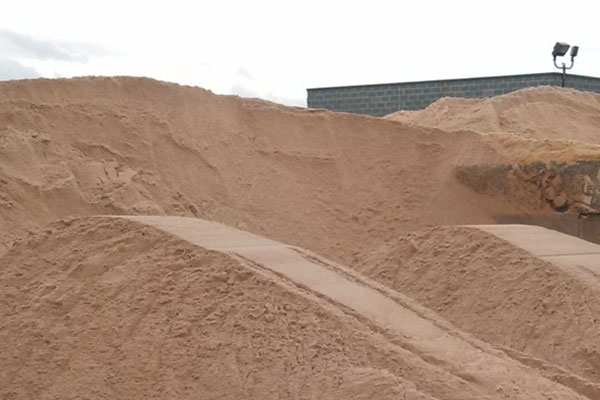
High-grade stone dust (also known as crusher dust or quarry dust) is a fine aggregate byproduct of the stone-crushing process. With its sharp, angular particle design, it fills internal structural spaces better than smooth river sand, boosting overall concrete density and compression strength. Buildify delivers clean, screened stone dust across Gurugram and the NCR to support stable masonry, paving, and casting.
What is Stone Dust?
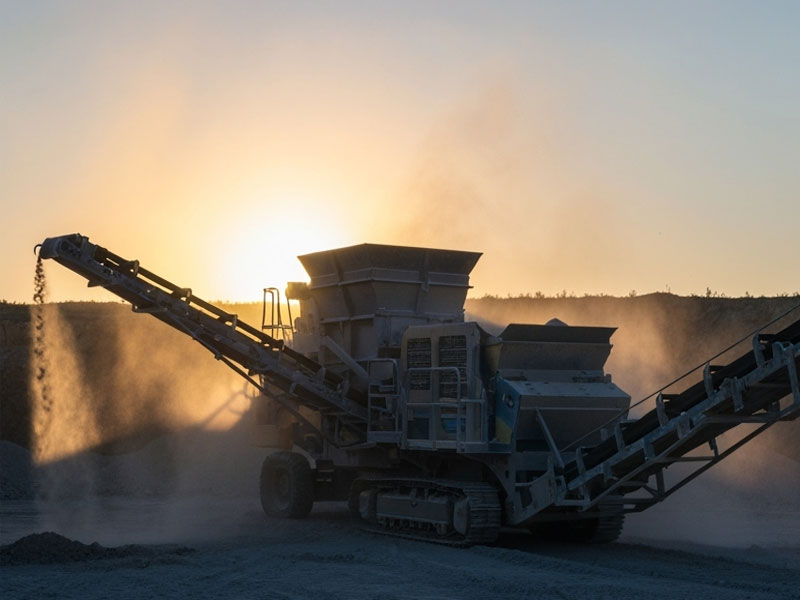
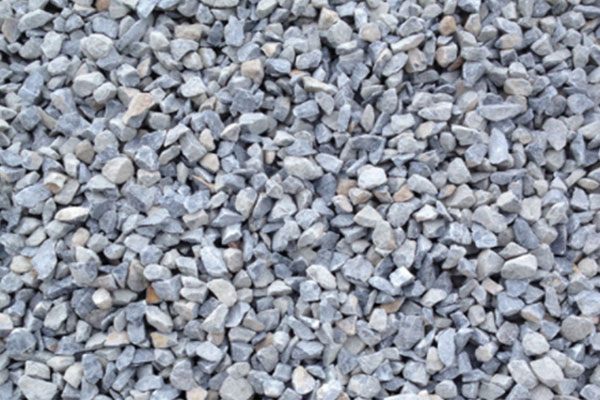
In simple terms, stone dust is natural granite or limestone crushed down into a fine, gritty powder. It is produced by mechanical crushers when making large stone aggregates (Rodi).
Unlike smooth river sand, which has rounded grains worn down by water, stone dust features highly angular, rough edges. This geometric shape provides a key advantage: the particles lock together tightly under pressure, creating a highly durable base layer for heavy-load applications.
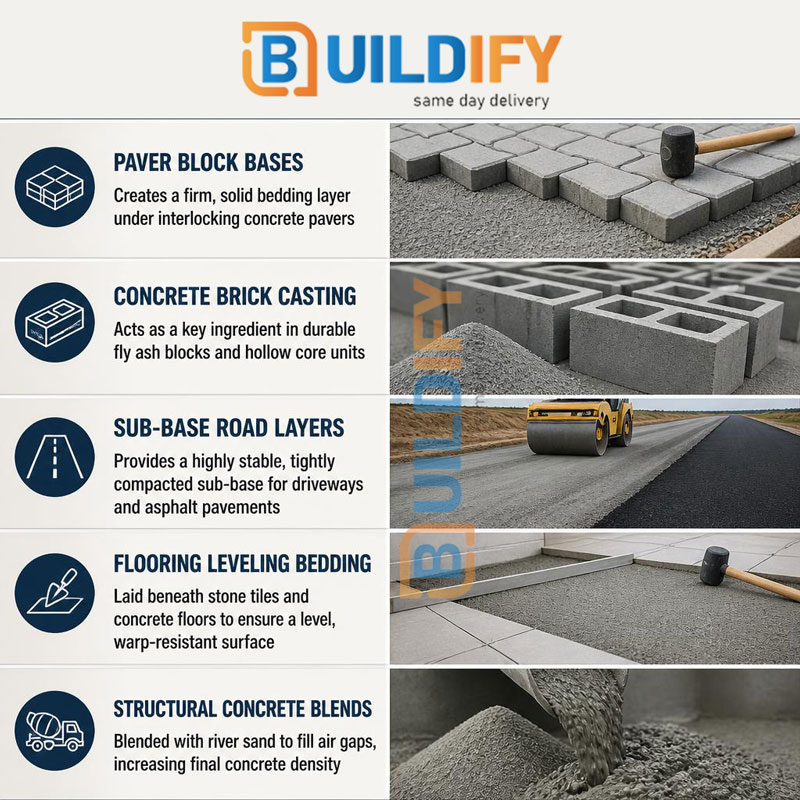
Today, stone dust is widely used as a budget-friendly fine aggregate substitute in structural concrete mixes, block manufacturing, highway sub-bases, and interlocking paver installations.
How Buildify Stone Dust is processed?
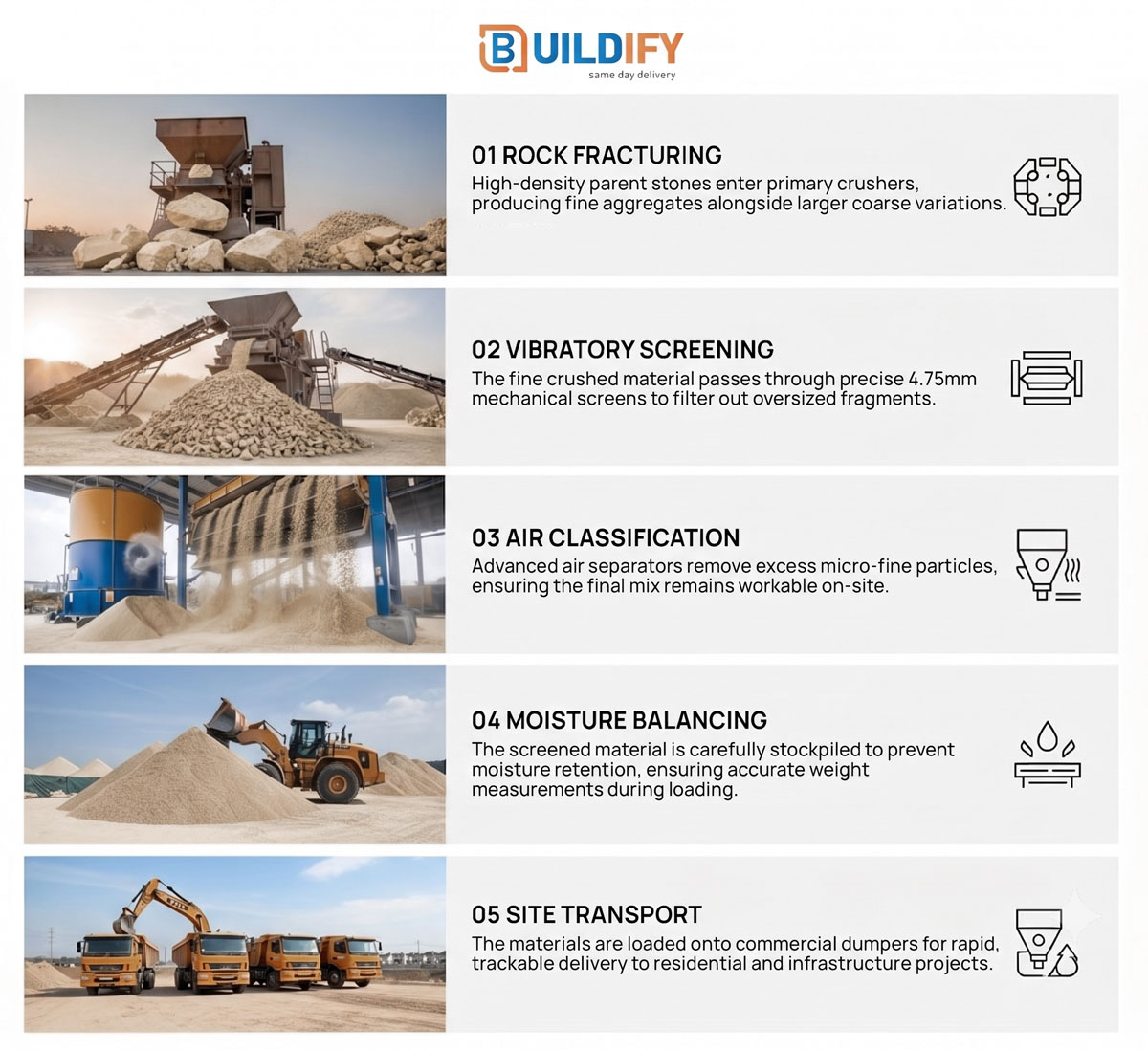
The Quality Threshold Rule: Unscreened quarry waste often contains excessive silt and dust, which can absorb too much mixing water and weaken final concrete structures. Buildify's multi-tier screening process keeps micro-fines within strict standards, providing a safe, reliable, and strong bonding performance.
Common Stone Dust formats,
which type does your project require?
Stone dust behaves differently depending on its texture and particle size distribution and we sourced from Charkhi dadri, atela, Haryana which is the best quality for delivering in Gurugram-NCR. Selecting the proper grading ensures high strength across specific construction stages:
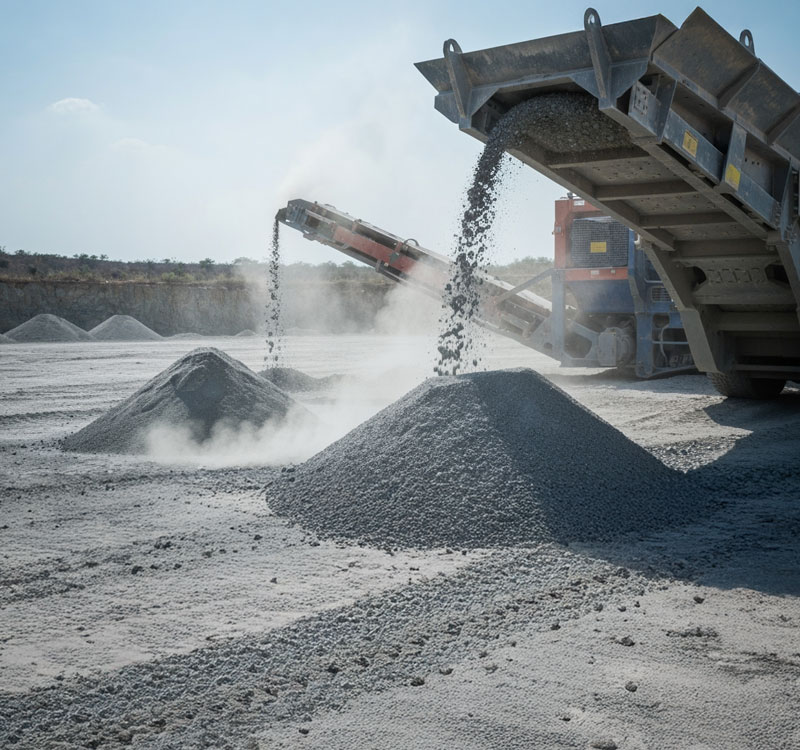
Coarse Crusher Mix
0 mm to 4.75 mm Particles
Masonry Mortar Format
A finely sieved variety used as a partial sand replacement in brick-laying mortar, offering smooth workability and excellent trowel control.
Screened Fine Dust
0 mm to 2 mm Particles
Concrete & Asphalt Grade
Features a gritty, sand-like texture with minimal powder. Ideal for structural concrete blends, fly ash brick production, and hot-mix asphalt layers.
Sub-Base Stabilizer
Unscreened Run-of-Crusher
Paving & Compaction Base
Contains a balanced mix of fine dust and small stone fragments. Perfect for compacting under walkways, driveways, and interlocking concrete pavers.
Quick Pro-Tip: When installing interlocking paver stones, use a 1-inch to 2-inch base layer of stone dust sourced from Charkhi dadri, atela, Haryana instead of loose sand. The angular dust particles compact tightly together, preventing pavers from shifting or sinking under vehicle weight. Need help estimating tons? Contact our dispatch desk at +91-9999253084.
Why Engineers and Project Managers Specify Buildify Stone Dust
High Structural Compaction
When compressed, the particles' angular, uneven forms firmly link together to form a solid foundation layer that is resistant to shifting over time.
Fills Voids Efficiently
he fine particles fit cleanly into the empty spaces between larger gravel pieces, increasing overall concrete density and reducing fluid absorption.
Cost-Effective Alternative
As a crushed byproduct, stone dust is priced lower than limited river sand options, helping reduce material expenses across large-scale projects.
Zero Organic Matter
Unlike river bed materials, stone dust is completely free of organic impurities like seeds, silt, or roots, preventing early breakdown within structural mortars.
Eco-Friendly Option
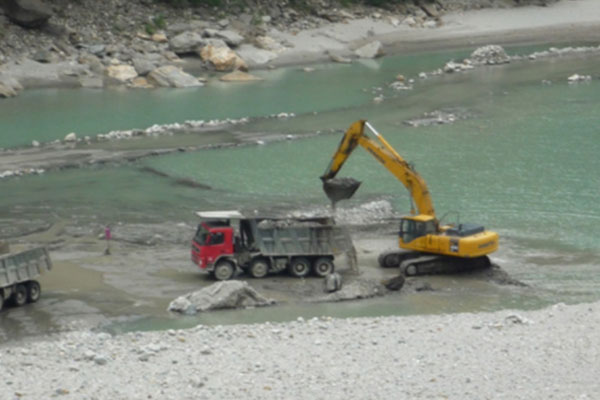
Using quarry stone dust helps lower demand for riverbed sand mining, protecting natural river ecosystems while utilizing processing byproducts.
Consistent Batch Texture
Produced in controlled, modern crushing plants, our stone dust maintains consistent grading across every truckload shipped to your site.
Stone Dust vs. Natural River Sand vs. Yamuna Sand
Comparing fine aggregate options reveals how stone dust offers clear advantages in terms of mechanical interlocking and cost:
| Performance Metric | Buildify Stone Dust | Natural River Sand | Yamuna Sand |
|---|---|---|---|
| Particle Geometry | Sharp Angular Edges | Rounded Grains | Sub-Rounded Grains |
| Mechanical Interlock | Highest Interlocking Bond | Moderate Grip | Low Grip |
| Organic Contaminants | Absolutely Zero (Inorganic) | Presents Silt Risks | Presents Clay/Organic Risks |
| Compaction Stability | Excellent (Resists Shifting) | Standard Stability | Low Compaction Profile |
| Project Cost Factor | Highly Budget-Friendly | Premium Cost | High Cost Scale |
| Primary Utilization | Flooring bases, blocks, concrete mixes | Internal plastering, RMC mixtures | Brick masonry, general mortars |
Technical Compliance Parameters (IS 383 Grid)
| Tested Parameter | Certified Specification Value | Structural Role Significance |
|---|---|---|
| Mineral Composition | Dense Granite / Limestone Byproduct | Ensures long-term structural durability. |
| Particle Sizing Scope | 0 mm to 4.75 mm Maximum Bound | Meets standard classification guidelines for fine aggregates. |
| Sieve Zone Classification | Conforms to Zone II / Zone III Standards | Ensures a balanced, well-graded particle distribution. |
| Loose Bulk Density | 1550 kg/m³ to 1720 kg/m³ Variable Range | Supports heavy structural compaction beneath foundations. |
| Permissible Fine Silt Limits | Maintained strictly below 8.0% Limits | Prevents issues with excessive water demand on site. |
| Organic Impurities Status | Completely Free of Organic Matter | Protects embedded reinforcement steel from early rust risks. |
| National Bureau Code Match | IS 383:2016 Compliant Profile | Fully approved for code-compliant building designs. |
| Minimum Order Capacity | Full Volumetric Tipper Truckloads | Optimized for large commercial developments and private builders. |
How Buildify Stone Dust is processed?
The Quality Threshold Rule: Unscreened quarry waste often contains excessive silt and dust, which can absorb too much mixing water and weaken final concrete structures. Buildify's multi-tier screening process keeps micro-fines within strict standards, providing a safe, reliable, and strong bonding performance.
Common Stone Dust Myths Busted!
| Myth | Fact |
|---|---|
| Stone dust can fully replace cement in mortar mixes | Stone dust is a fine aggregate, not a hydraulic binder. It functions as a sand alternative and must always be combined with cement and water to properly bind materials together. |
| Stone dust naturally holds too much water, causing cracks. | High water demand only occurs if the dust contains excessive micro-fine waste powder. Buildify's screened stone dust keeps fines well within limits, supporting smooth workability and a safe curing process. |
| Using stone dust makes concrete look dark and unattractive. | While the raw mix may appear slightly darker, the concrete cures to a standard structural grey. For visible internal plastering, natural sand can still be selected for a lighter finish. |
| Stone dust naturally contains organic seeds that sprout under tiles. | Stone dust is produced directly from freshly blasted rock matrices in Charkhi dadri and Atela, Harayana, making it completely sterile. Any plant growth stems from subgrade soil below an unsealed base layer, not the dust itself. |